

Estate planning for 2026 death tax is more critical than ever, and I understand this journey intimately—not just as an attorney, but as someone who suffered a terrible probate when my grandfather passed away. It destroyed my family. I vowed to make the world a better place by learning the law, becoming a lawyer, and helping families get quality legal counsel. Read my story here www.JOValentino.com/about.
Elon Musk claims Trump visited Epstein Island; Trump insists Elon has lost touch with reality. Amid their feud, critical tax legislation is stalled, leading to significant financial implications for affluent families. If no legislative action occurs by 2026, the federal estate tax exemption will dramatically decrease, potentially subjecting many estates to a harsh 40% death tax.
This guide provides actionable strategies to shield your wealth from this impending estate tax increase. Early preparation can save your family substantial wealth and emotional distress.
Understanding the 2026 Estate Tax Changes
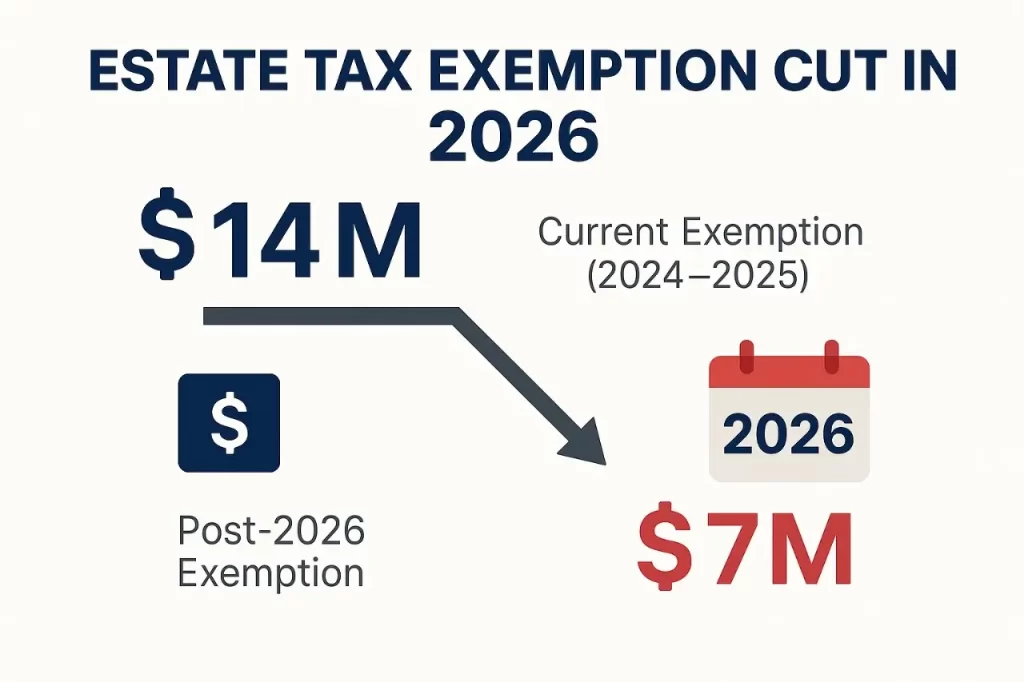
Beginning in 2026, the federal estate tax exemption is set to decrease from approximately $14 million per individual ($28 million per married couple) to about $7 million per individual ($14 million per married couple). Estates exceeding these new thresholds will face a substantial 40% estate tax on amounts over the exemption limit.
Without strategic estate planning, many families previously unaffected by estate taxes may suddenly face significant liabilities. For further detailed information, please visit the official IRS Estate and Gift Taxes page and review Merrill Lynch’s insightful analysis on the 2026 Estate Tax Exemption Sunset.
Who Will Face the 2026 Death Tax?
Estate planning for 2026 death tax should be top-of-mind for:
- High-net-worth individuals
- Families with extensive real estate holdings
- Owners of privately-held businesses
- Large investment portfolios
Families with estate values close to or exceeding the reduced exemption threshold must proactively plan now to mitigate substantial future tax exposure. Florida residents should also familiarize themselves with specific state laws, notably the Florida Probate Code Chapter 733, to understand additional local implications.
Estate Planning for 2026 Death Tax: Top Strategies

To counter the consequences of estate planning for 2026 death tax, consider the following tools:
- Irrevocable Trusts: Removes assets from your taxable estate, limiting tax exposure.
- Lifetime Gifting: Leverages current higher gift tax exemptions before reduction.
- Family Limited Partnerships (FLPs): Allows asset transfers at discounted valuations.
- Charitable Remainder Trusts: Generates immediate tax deductions while fulfilling charitable intentions.
- Annual Gift Exclusion: Current limits ($17,000 per recipient annually) offer tax-free wealth transfer opportunities.
These strategies can significantly reduce or even eliminate your estate’s tax liabilities.
Example: Protecting a Family Legacy from 2026 Tax
Consider a Father, founder of a prosperous family office overseeing diverse assets totaling approximately $30 million. Anticipating tax changes, he implemented several proactive measures:
- Transferred substantial assets into irrevocable trusts.
- Maximized lifetime gifting exemptions to his descendants.
- Established a charitable family foundation.

These strategies dramatically reduced his taxable estate. Consequently, when the Father passed away, his family avoided millions in potential estate taxes, preserving generational wealth and family harmony.
Breakdown: Estate Planning for 2026 Death Tax Explained
This detailed look at estate planning for 2026 death tax strategies shows how Trusts and gifting reduce tax burdens.
- Irrevocable Trusts: Removed appreciating assets from the taxable estate.
- Lifetime Gifting: Reduced estate size effectively, leveraging current favorable exemption levels.
- Charitable Foundation: Created immediate and long-term tax benefits while serving philanthropic goals.
Without these measures, the Father’s family faced approximately $9.2 million in estate taxes (40% on $23 million above the $7 million exemption threshold). Effective estate planning minimized this liability significantly.
Common Mistakes to Avoid
Avoid these costly pitfalls:
- Waiting too long to implement tax-saving measures.
- Failing to update estate planning documents regularly.
- Not utilizing annual and lifetime gift tax exemptions fully.
- Overlooking charitable planning as a viable tax reduction strategy.
Proactive steps now can prevent substantial financial losses in the future.
My Experience Helping Florida Families Plan for 2026
Since founding my practice in 2016, I have dedicated myself to helping affluent families navigate complex estate and tax planning issues. My approach prioritizes preserving wealth, minimizing taxation, and ensuring families can confidently pass on their legacies. Every client receives tailored, strategic solutions to address their unique circumstances effectively.
Author’s Note: Why I’m Urgent About 2026 Planning
Witnessing firsthand how inadequate planning devastates families financially and emotionally drives my passion daily. Your estate represents your life’s achievements, security for loved ones, and your enduring legacy. My mission is to protect your legacy through meticulous, compassionate, and strategic estate planning. Your family’s financial security and peace of mind are my ultimate priorities.
Books Worth Reading
- The Essential Guide to Florida Estate Planning
- Star Spangled Planner
- Global Family’s Guide to US Inheritance Law – Gold Card Advantage
- The Florida Realtor’s Guide to Probate Properties
Fun Learning with Celebrity News Videos
You have three ways to get in touch with me:
- 📞 Call: (305) 634-7790
- 📧 Email: JO@JOValentino.com
- 🌐 Online Form: www.JOValentino.com/contact
FAQs
What is happening to the estate tax exemption in 2026?
It’s set to halve—from ~$14M to ~$7M per person—unless Congress extends current law .
Can I preserve today’s higher exemption?
Yes—IRS rules let early gifts use the higher exemption even after the sunset.
What are the best planning strategies?
Use irrevocable trusts, lifetime gifting, FLPs, and charitable remainder trusts before 2026.
Are LLC gifting strategies effective?
Yes—wealthy families use LLCs to speed transfers before the exemption drop.
Disclaimer
This article is for informational purposes only and does not constitute legal advice or create an attorney-client relationship. Reading this does not make me your lawyer – I can only accept that role through a signed written agreement with you, after we’ve both agreed to it. Every situation is unique, and laws change. Please consult me (or another qualified attorney) for advice tailored to your specific circumstances. Until you receive a signed writing from me confirming I’ve agreed to be your attorney, please do not assume any guidance here applies to your exact situation. I am licensed in Florida, and any references to laws are based on the current statutes and rules as of the time of writing. I strive for accuracy, but I cannot guarantee that all information here remains up-to-date or applicable to all readers. In short: Let’s talk one-on-one before making big decisions. I’m here when you’re ready.
Thank you for reading, and I wish you and your family the very best in wealth, health, and happiness.




Share: