

I understand this journey intimately—not just as an attorney, but as someone who suffered a terrible probate when my grandfather passed away. It destroyed my family. I vowed to make the world a better place by learning the law, becoming a lawyer, and helping families get quality legal counsel. Read my story here: About me.
Legendary quarterback Tom Brady faces a unique estate planning puzzle: how do you divide seven Super Bowl rings among three children? Similarly, estate planning for real estate division in Florida requires clear strategies—because while real estate can be shared, it can’t be physically split like memorabilia. This article explores how to divide real property among heirs effectively, ensuring financial benefit, tax efficiency, and lasting family harmony.
In this guide to estate planning for real estate division in Florida, we’ll explore strategies—from step‑up in basis benefits to 1031 exchanges—that help families divide property fairly and efficiently.

Why Real Estate Division Matters
When you leave real estate to multiple heirs, it can become a source of confusion and conflict. Understanding estate planning for real estate division in Florida means knowing how clarity now can prevent disputes later. Unlike personal memorabilia like Tom Brady’s rings, real estate is highly divisible and offers practical solutions to preserve family harmony and financial stability.


How the Step-Up in Basis Benefits Florida Heirs
One major financial advantage of inheriting real estate is the “step-up in basis.” This IRS rule resets the property’s cost basis to its fair market value at the time of the owner’s death. Consequently, heirs pay significantly less—or even no—capital gains taxes when selling inherited real estate.

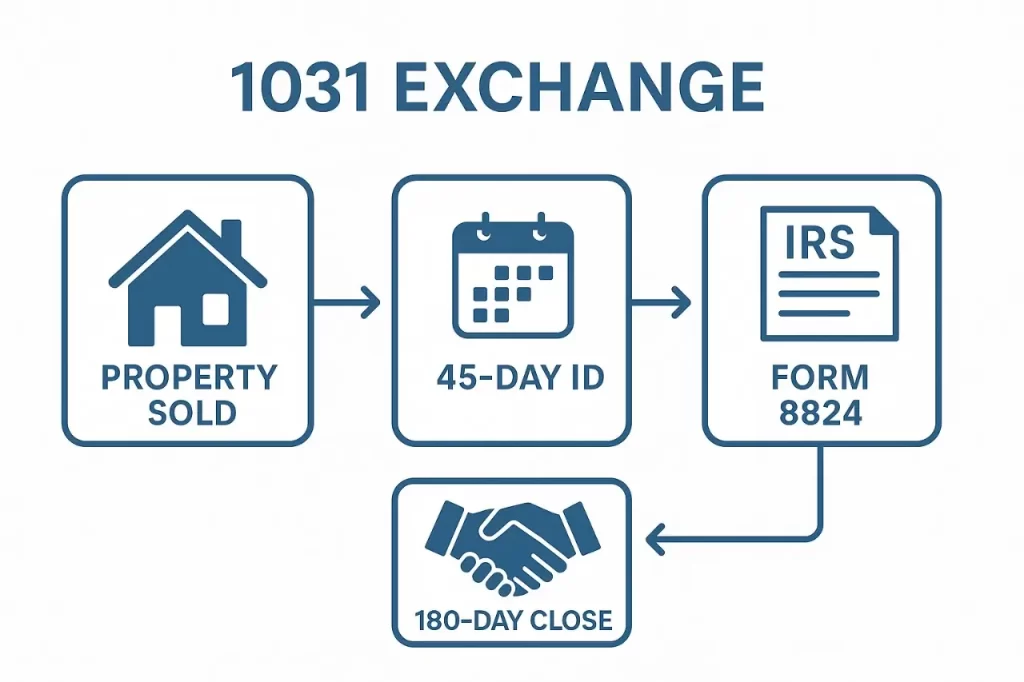
For example, if a property was originally purchased for $1,000,000 and appreciates to $8,000,000 at the owner’s passing, the heirs inherit the property at the stepped-up value of $8,000,000. If they sell immediately, they pay no capital gains tax on the $7,000,000 increase. Conversely, if the property had been sold before death, it would necessitate significant capital gains tax payments unless tax-saving tools such as a 1031 exchange were implemented.

Estate Planning for Real Estate Division in Florida: Your Options
As a dual attorney and broker, I specialize in estate planning for real estate division in Florida, ensuring your assets translate into harmony and financial fairness. Several practical options exist for dividing real estate among heirs:
- Sell and Divide Proceeds: Often the simplest, providing liquidity and significant tax savings due to step-up in basis.
- Buy-Out by One Heir: One heir purchases the others’ shares, keeping property intact.
- Joint Ownership: Maintain joint ownership, though this requires cooperative management and shared responsibilities.
- Establish a Trust: Similar to Brady placing his rings in trust, real estate can be managed collectively.
While each option has merits, selling is frequently the easiest and most beneficial due to tax considerations and simplicity.

Example: Commercial Property Inheritance & Resolution
Consider a Father who owned a valuable commercial office building. Upon his passing, his three children inherited the property equally. The children faced a dilemma: one child wanted to keep the building for ongoing rental income, another preferred immediate cash to invest elsewhere, and the third child lived out-of-state with no interest in property management.
After careful consideration, the heirs chose to sell the office building. The sale provided liquidity, resolved disagreements, and offered substantial tax savings due to the step-up in basis. This pragmatic choice preserved family relationships, simplified estate administration, and allowed each child to pursue their individual financial goals.
Breakdown: Analyzing Florida Real Estate Division Plans
In the example above, the Father’s heirs faced common inheritance issues: divergent preferences, geographic distance, and financial goals. Selling the real estate simplified these complexities.
Here’s why selling was the best option:
- Liquidity: Provided immediate funds for each heir.
- Fair Division: Proceeds could easily be divided equally.
- Avoided Management Conflicts: Removed ongoing property management burdens.
- Tax Efficiency: Maximized tax savings through the step-up in basis.
Choosing to sell real estate, particularly with professional guidance from someone like myself who is both an attorney and licensed real estate broker, simplifies estate management and enhances financial outcomes for heirs. Ultimately, effective estate planning for real estate division in Florida turns a potentially contentious inheritance into a strategic wealth opportunity.
My Experience as an Attorney & Broker in Florida
Since opening my firm in 2016, I have guided numerous families through the complex emotions and decisions surrounding estate property division. As both an attorney and real estate broker, I offer a unique perspective, seamlessly integrating legal insight with practical real estate expertise. My goal is always to ensure families achieve clarity, fairness, and maximum financial benefit in their estate planning.
Author’s Note: The Personal Impact of Clear Estate Planning
The emotional toll of dividing inherited property can be profound—I know because I’ve lived through it myself. I have witnessed the unnecessary strain caused by inadequate planning, and it fuels my passion for providing clarity and solutions. Helping families navigate this challenging terrain is more than a job; it’s my commitment to preserving their emotional and financial well-being. Each family I serve receives personalized, compassionate guidance aimed at strengthening relationships and preserving legacies.
Books Worth Reading
Fun Learning with Celebrity News Videos
Additional Resources
You have three ways to get in touch with me:
- 📞 Call: (305) 634-7790
- 📧 Email: JO@JOValentino.com
- 🌐 Online Form: www.JOValentino.com/contact
Disclaimer
This article is for informational purposes only and does not constitute legal advice or create an attorney-client relationship. Reading this does not make me your lawyer – I can only accept that role through a signed written agreement with you, after we’ve both agreed to it. Every situation is unique, and laws change. Please consult me (or another qualified attorney) for advice tailored to your specific circumstances. Until you receive a signed writing from me confirming I’ve agreed to be your attorney, please do not assume any guidance here applies to your exact situation. I am licensed in Florida, and any references to laws are based on the current statutes and rules as of the time of writing. I strive for accuracy, but I cannot guarantee that all information here remains up-to-date or applicable to all readers. In short: Let’s talk one-on-one before making big decisions. I’m here when you’re ready.
Thank you for reading, and I wish you and your family the very best in wealth, health, and happiness.
FAQs
What is a “step-up in basis”?
It resets inherited property’s tax basis to current market value, minimizing capital gains upon sale
How does a 1031 exchange help heirs?
It lets heirs defer capital gains by reinvesting sale proceeds into like-kind real estate within 45 and 180-day timeframes
Why sell and divide real estate?
Selling avoids ownership conflicts, provides liquidity, ensures fairness, and leverages tax benefits like step-up basis.




Share: